Talent Management System: Complete Guide for HR Professionals
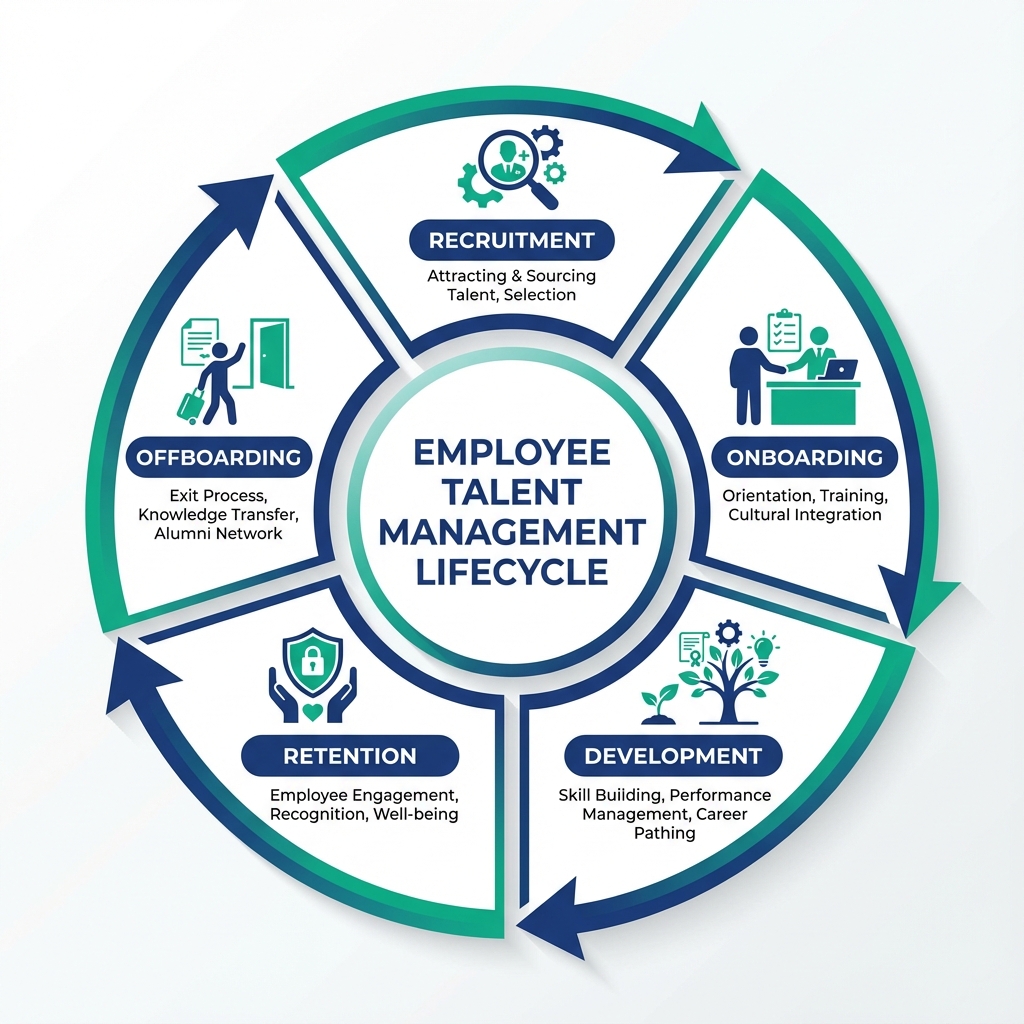
Talent management systems represent a strategic approach to maximizing employee potential throughout the employment lifecycle. While applicant tracking systems focus on bringing people into organizations, talent management systems concentrate on developing, engaging, and retaining employees once they're on board. Understanding how these systems function and what capabilities they offer helps HR professionals build workforces that drive organizational success.
Understanding Talent Management Systems
A talent management system (TMS) is integrated software designed to support strategic human capital management across multiple HR functions. These platforms typically encompass performance management, learning and development, succession planning, compensation management, and career development. Rather than treating these functions as separate activities, a TMS provides a unified framework where data and insights flow between modules, enabling more holistic people management.
The fundamental premise of talent management systems is that employees represent strategic assets requiring ongoing investment and attention, not just positions to be filled. This philosophy shifts HR's focus from transactional activities to strategic workforce development. A well-implemented TMS provides the tools and structure to identify high-potential employees, address skill gaps, align individual development with organizational needs, and create clear career pathways that improve retention.
The evolution of talent management systems reflects changing understanding of what drives employee engagement and organizational performance. Early systems focused primarily on performance appraisal automation. Modern platforms incorporate competency frameworks, continuous feedback mechanisms, personalized learning recommendations, and analytics that connect people management practices to business outcomes. This evolution recognizes that effective talent management requires more than annual reviews and standardized training programs.
Core TMS Components
Performance management functionality forms a central pillar of most talent management systems. Rather than relying solely on annual reviews, modern performance management within a TMS supports continuous feedback, goal tracking aligned with organizational objectives, and documentation of achievements and development needs. Managers and employees can set goals collaboratively, update progress regularly, and have ongoing conversations about performance rather than waiting for scheduled review periods.
Performance calibration features help organizations maintain consistency in how employees are evaluated across different managers and departments. Calibration sessions facilitated by the TMS allow leadership teams to compare ratings, discuss outliers, and ensure that performance assessments reflect genuinely differentiated contributions. This consistency increases the fairness and credibility of performance management processes.
Learning and development modules within talent management systems create personalized employee development experiences. Based on performance reviews, skills assessments, and career aspirations, the system can recommend specific training programs, courses, or development activities. Integration with learning management systems or built-in learning libraries provides employees with easy access to development resources. Tracking completion and assessing the impact of learning activities creates accountability and demonstrates ROI.
Succession planning capabilities identify critical roles, assess bench strength for those positions, and highlight development needs for potential successors. Rather than informal conversations about who might replace departing leaders, a TMS structures succession planning with clear criteria, objective assessments of readiness, and development plans to prepare high-potential employees for advancement. This systematic approach reduces the risk of leadership gaps and improves organizational continuity.
Career development tools help employees understand potential career paths within the organization and what skills or experiences they need to progress. Self-service career planning features allow employees to explore options, identify required competencies for target roles, and create development plans to build those capabilities. Organizations benefit from better internal mobility and employees gain clarity about growth opportunities.
Compensation management functionality connects pay decisions to performance and market data. Compensation planning workflows guide managers through merit increase allocations, bonus distributions, and equity grants while maintaining budgets and ensuring internal equity. Market pricing data integrated into the TMS helps organizations make competitive compensation decisions. Transparency features show employees how compensation is determined, improving trust in pay fairness.
Integration with Recruiting and Onboarding
The connection between applicant tracking systems and talent management systems creates continuity across the employee lifecycle. When recruiting and talent management are integrated, data captured during hiring flows directly into the TMS, creating complete employee profiles from day one. Competencies assessed during recruitment inform development plans. Hiring manager expectations documented in job descriptions become performance criteria. This continuity prevents information loss and reduces duplicate data entry.
Onboarding bridges recruiting and ongoing talent management, and integrated systems provide superior onboarding experiences. New hire paperwork, equipment provisioning, training assignments, and introductory goal-setting can all be orchestrated through connected systems. Managers have visibility into onboarding progress and new employees encounter a cohesive experience rather than disconnected systems and processes. Effective onboarding significantly impacts long-term retention and performance.
Some integrated platforms combine recruiting and talent management in single systems, such as Flowxtra's talent management system, which provides end-to-end solutions from initial candidate contact through ongoing employee development and performance management. The platform's unified approach allows HR teams to manage the complete employee lifecycle—from recruitment through performance reviews and development planning—within a single interface, eliminating data silos and reducing administrative overhead.
Competency frameworks established in the TMS can be leveraged during recruiting to ensure consistent evaluation criteria. Rather than developing separate interview guides and performance standards, organizations use the same competency models throughout the employee relationship. This consistency improves the predictive validity of hiring decisions and clarifies expectations for new employees from the outset.
Strategic Workforce Planning
Talent management systems enable data-driven workforce planning by providing visibility into organizational capabilities and gaps. Skills inventories show what competencies currently exist within the workforce and where shortages might emerge. Retirement eligibility reports highlight potential knowledge loss. Performance and potential matrices identify high performers who could fill expanding roles or leadership positions.
Scenario planning features allow organizations to model workforce changes under different business conditions. If the company expands into new markets, what skills will be needed? If a major customer is lost, how should workforce composition change? The TMS provides the data foundation to answer these questions analytically rather than relying purely on intuition.
Gap analysis capabilities compare current workforce capabilities to future needs, highlighting where development, recruiting, or restructuring is required. This forward-looking perspective helps organizations prepare for change proactively rather than reacting when gaps become critical. Strategic workforce planning transforms talent management from reactive problem-solving to proactive capability building.
Employee Engagement and Retention
Pulse surveys and engagement measurement tools integrated into talent management systems provide regular insights into employee sentiment. Rather than annual engagement surveys that provide outdated snapshots, pulse surveys collect frequent feedback on specific topics. Real-time visibility into engagement trends allows managers to address issues promptly rather than learning about problems months after they emerge.
Recognition programs facilitated through the TMS encourage peer-to-peer appreciation and manager recognition of employee contributions. Public acknowledgment of achievements, even for small wins, contributes to positive workplace culture and employee motivation. Integration with compensation modules can link recognition to rewards, strengthening the connection between performance and consequences.
Stay interviews and retention risk assessment features help organizations identify flight risks before resignations occur. Managers can document conversations about what makes employees want to stay, what might cause them to leave, and what changes would improve their experience. Analytics identify patterns in which types of employees are at higher retention risk, allowing targeted interventions.
Career mobility supported by the TMS improves retention by creating internal opportunities. When employees can explore internal openings, transfer between departments, or pursue lateral moves to gain new experiences, they're more likely to find long-term career satisfaction within the organization. Internal mobility reduces recruiting costs while retaining institutional knowledge.
Analytics and Reporting
Descriptive analytics in talent management systems provide visibility into workforce composition, performance distributions, training completion rates, and other fundamental metrics. Executive dashboards present key people metrics alongside business performance indicators, reinforcing the connection between workforce capability and organizational results. Standard reports meet common analytical needs while ad-hoc reporting capabilities support specific inquiries.
Predictive analytics leverage historical data to forecast future outcomes. Turnover prediction models identify employees at risk of leaving based on engagement scores, time in role, performance trends, and other factors. High-potential identification algorithms flag employees likely to succeed in leadership based on competencies, performance history, and career trajectory. These predictions enable proactive rather than reactive people management.
Prescriptive analytics recommend specific actions based on data patterns. If an employee shows declining engagement scores after missing a promotion, the system might recommend a career development conversation and specific development opportunities. When a team shows low completion of required training, the system might suggest scheduling dedicated learning time. Prescriptive insights help managers who lack HR expertise take appropriate actions.
People analytics dashboards connect workforce metrics to business outcomes. Correlations between employee engagement and customer satisfaction, between training investments and productivity improvements, or between leadership quality and innovation metrics demonstrate the business impact of talent management practices. These insights justify continued investment in people development and guide strategic decisions.
Implementation Considerations
Defining clear objectives before implementing a talent management system prevents the common mistake of acquiring technology without strategic purpose. Organizations should identify specific problems they're trying to solve or capabilities they're trying to build. Improving leadership pipeline strength differs from reducing regrettable turnover, which differs from ensuring compliance with performance management requirements. Clear objectives guide configuration, customization, and change management.
Change management represents the critical success factor in TMS implementation. Talent management processes touch every employee and manager in the organization, making widespread adoption essential. Communication strategies explaining why the system is being implemented, how it will benefit employees, and what changes to expect reduce resistance. Involving managers and employees in design decisions increases buy-in.
Process redesign should precede system implementation. If current performance management consists of annual reviews that managers complete grudgingly and employees find useless, automating that process with a TMS won't suddenly make it valuable. Organizations should redesign people management processes to align with best practices before implementing technology to support them. The system should enable good processes, not perpetuate dysfunctional ones.
Phased deployment allows organizations to implement talent management system components sequentially rather than simultaneously. Starting with performance management, then adding learning and development, then incorporating succession planning reduces complexity and allows time to master each component. Users aren't overwhelmed by trying to learn an entire system at once, and implementation teams can focus resources on each phase.
Measuring TMS Impact
Employee development metrics such as percentage of employees with documented development plans, training hours completed per employee, and skill gap closure rates indicate whether the TMS is improving capability building. Without measurement, development activities can become compliance exercises that consume time without building competencies. Tracking outcomes demonstrates whether learning investments yield results.
Internal mobility rates show whether the TMS is facilitating career movement within the organization. Higher percentages of positions filled by internal candidates and increased lateral movement between departments suggest that career development features are working effectively. Internal mobility improves retention, preserves institutional knowledge, and reduces recruiting costs.
Performance improvement trends measured through the TMS indicate whether performance management processes are driving meaningful development. If performance ratings remain static year over year, the system may be documenting performance without improving it. Evidence of performance growth, especially for employees who started with lower ratings, suggests that development planning and feedback mechanisms are effective.
Retention of high performers represents a critical talent management outcome. While overall turnover matters, retaining top contributors matters more. Tracking retention rates for high-potential employees and top performers specifically reveals whether the TMS is supporting engagement and career satisfaction for those the organization most wants to keep. Losing average performers costs less than losing stars.
Succession bench strength metrics show whether succession planning activities are building organizational readiness for leadership transitions. Measures such as percentage of critical roles with identified successors, readiness ratings for successors, and time required to fill leadership positions demonstrate succession planning effectiveness. Strong succession benches provide organizational stability and reduce risks associated with leadership changes.