ATS vs Manual Hiring: Comparing Approaches
Understanding the differences between applicant tracking system-supported hiring and manual recruitment processes helps organizations decide when to invest in recruiting technology.
Manual Hiring Processes
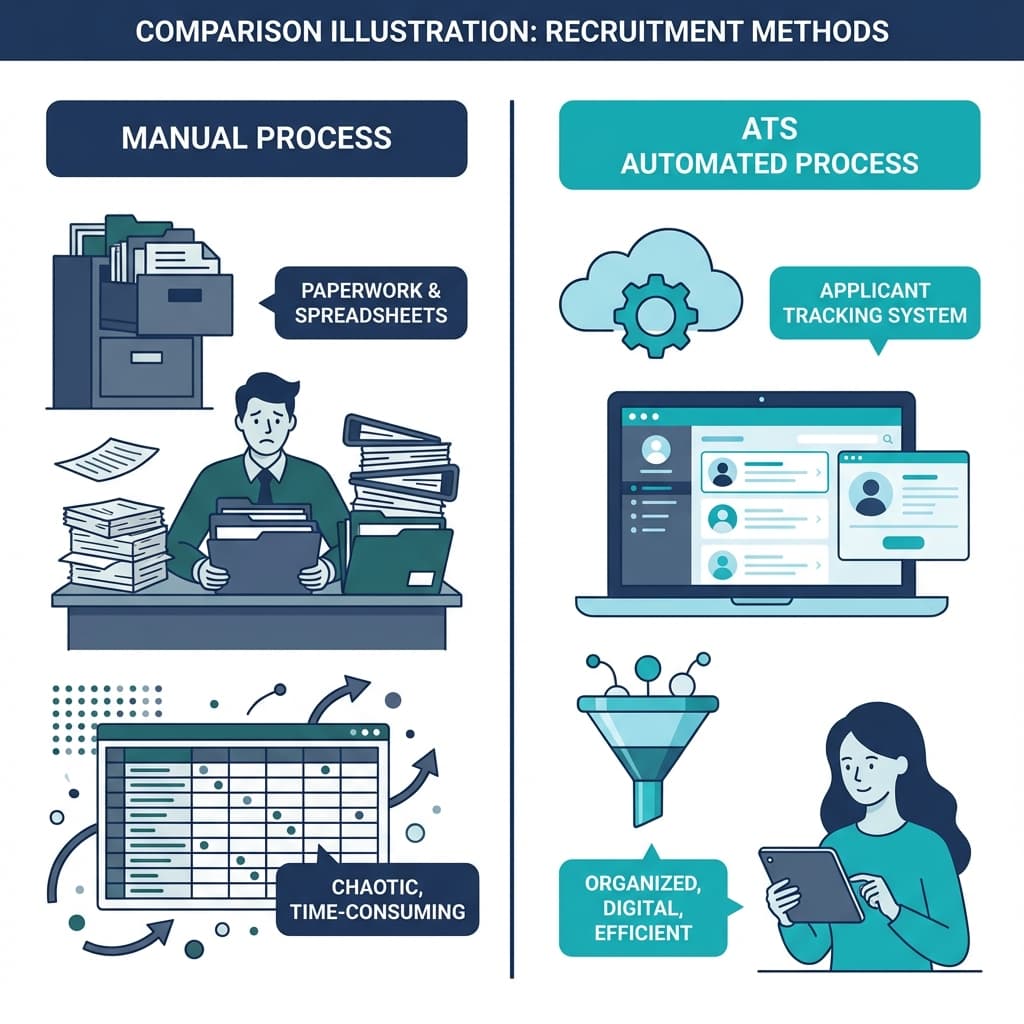
Traditional manual hiring relies on email, spreadsheets, and individual recruiters' organizational systems. Candidates send applications to email addresses. Recruiters forward interesting resumes to hiring managers. Interview schedules are coordinated through back-and-forth email exchanges. Candidate information lives in various inboxes, downloaded resume files, and personal notes.
This approach works reasonably well at small scale. Organizations hiring one or two people quarterly can manage applications manually without excessive administrative burden. The primary advantage of manual hiring is zero software cost and no learning curve for new systems.
However, manual processes become increasingly problematic as hiring volume grows. Tracking dozens of candidates across multiple positions manually creates opportunities for candidates to be overlooked, duplicate outreach, or inconsistent communication. Collaboration becomes difficult when candidate information is scattered across individual email accounts.
ATS-Supported Hiring
Applicant tracking systems centralize all candidate information and hiring activities in a single platform accessible to everyone involved in recruitment. This centralization ensures nothing falls through the cracks and enables team-based hiring decisions with shared visibility into candidate status.
Automation features in ATS platforms reduce time spent on administrative tasks. Automated job posting distribution, resume parsing, email templates, and interview scheduling allow recruiters to process more applications in less time. This efficiency becomes valuable when hiring volumes increase or recruiting teams need to maintain quality while handling growing workloads.
Compliance and recordkeeping represent another significant advantage of ATS-supported hiring. The system automatically creates audit trails showing who made hiring decisions and why, generates EEO reports, and maintains records for required retention periods. Organizations with compliance obligations find these features essential.
Making the Decision
The choice between manual hiring and ATS adoption depends primarily on hiring volume and process complexity. Organizations hiring fewer than 10 people annually with straightforward processes may find manual methods sufficient. Those exceeding 15-20 hires per year or managing complex approval workflows typically benefit from ATS implementation despite the associated costs and change management requirements.
Explore ATS Solutions
Learn more about applicant tracking systems, their features, and how to choose the right solution for your organization.
Read Full ATS Guide →