AI in HR Recruiting: Transforming Talent Acquisition
Artificial intelligence is reshaping how organizations find, evaluate, and engage candidates, offering both powerful capabilities and important considerations for responsible implementation.
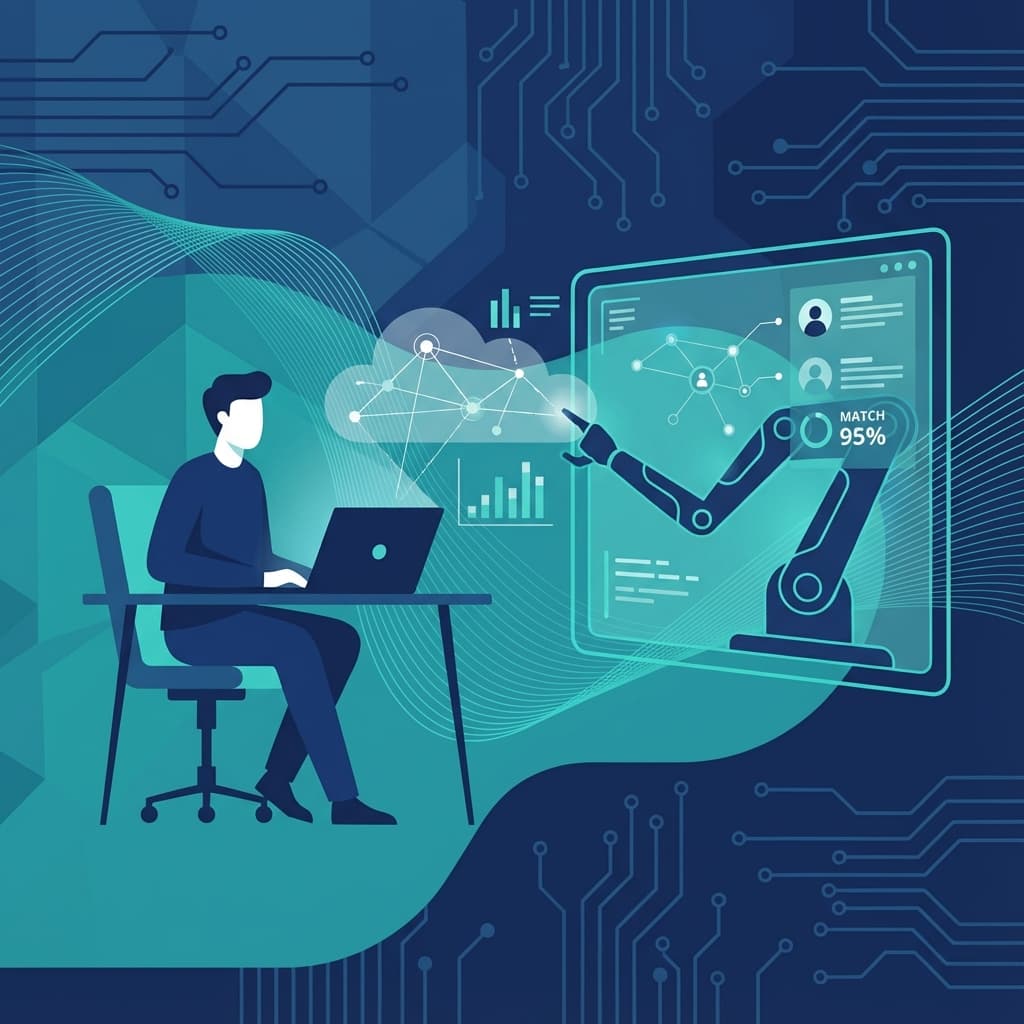
AI Applications in Recruiting
Resume screening powered by artificial intelligence analyzes applications against job requirements, identifying candidates whose qualifications match position needs. Machine learning algorithms learn from historical hiring decisions to recognize patterns in successful candidates, then apply those patterns to new applicants. This automation allows recruiters to focus attention on the most promising candidates rather than manually reviewing every application.
Candidate matching goes beyond keyword screening to understand semantic relationships between skills, experiences, and job requirements. AI can recognize that someone with "customer success" experience likely has relevant skills for a "client relations" role, even if the exact phrase doesn't appear in their resume. This sophisticated matching surfaces qualified candidates who might be missed by simple keyword searches.
Chatbots and virtual assistants handle initial candidate interactions, answering common questions about positions, company culture, or application status. These AI-powered tools provide immediate responses 24/7, improving candidate experience while reducing recruiter time spent on repetitive inquiries. More sophisticated chatbots can even conduct preliminary screening conversations, gathering information about candidate qualifications and availability.
Predictive analytics leverage historical data to forecast hiring outcomes. AI models can predict which candidates are most likely to succeed in specific roles based on patterns in past successful hires. Similarly, algorithms can identify which candidates are most likely to accept offers, helping recruiters prioritize outreach efforts. These predictions support more strategic recruiting decisions.
Important Considerations
Bias in AI recruiting systems represents a significant concern. Because machine learning algorithms learn from historical data, they can perpetuate biases present in past hiring decisions. If an organization has historically hired predominantly from certain backgrounds for particular roles, AI trained on that data may unfairly disadvantage candidates from underrepresented groups. Responsible AI implementation requires ongoing bias monitoring and mitigation.
Transparency and candidate experience matter when using AI in recruiting. Candidates deserve to know when they're interacting with automated systems rather than humans, and they should have options for human review of AI-generated decisions that affect their opportunities. Balancing automation efficiency with human judgment and maintaining positive candidate experiences requires thoughtful implementation.
The future of AI in recruiting likely involves increasing sophistication in understanding candidate potential beyond credentials listed on resumes. Natural language processing may analyze writing samples or interview responses to assess communication skills. Video analysis might evaluate non-verbal communication or presentation abilities. As these technologies advance, organizations must navigate both the opportunities they create and the ethical questions they raise.
Explore Modern Recruiting Technology
Learn more about applicant tracking systems and how they incorporate AI capabilities to improve recruiting efficiency and effectiveness.
Read Full ATS Guide →